Point-of-Sale Financing Explained for Lenders
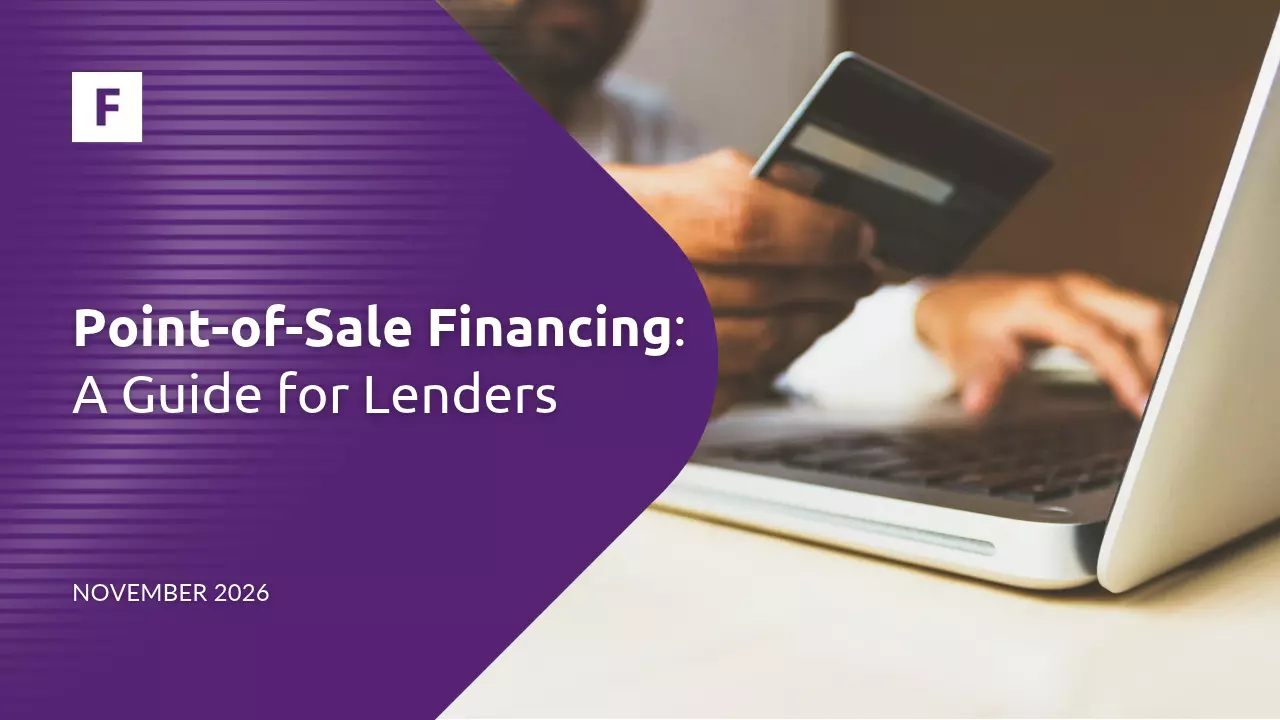
Point-of-sale financing is credit offered to the customer at checkout, online or in brick-and-mortar stores, to pay for a purchase in installments. This is also called point of sale consumer financing. For example, a customer buying a laptop can choose a financing option at checkout and repay the purchase over several months. The offer can appear on a merchant's website or be made available in-store.
For digital lenders, point-of-sale lending creates a way to reach customers through merchant partners when they need credit. The lender needs to make a credit decision while the customer is ready to buy, then keep the loan in sync with the order if the merchant cancels it, changes it, or accepts a return.
For lenders launching this type of financing, Fintech Market's purchase financing software supports configurable financing offers and connects purchase applications with loan management. Lenders can then assess the checkout journey, credit policy, and servicing process together.
How does point-of-sale financing work?
In a third-party lending arrangement, the merchant sells the goods or services and offers financing. The lender assesses the application, sets the credit terms, and funds the purchase if the customer accepts and the funding conditions are met. A payment provider may handle parts of checkout or settlement, depending on how the program is set up.
| Step | What happens |
|---|---|
| 1. The customer sees a finance option | The merchant presents financing for an eligible purchase. The order amount and other details can help determine which options are available. |
| 2. The customer applies | The customer provides the information the lender needs to assess the application. The application may happen during checkout or on a page hosted by the finance provider. |
| 3. The lender makes a decision | The lender applies its eligibility and credit policies. The integration needs to tell the merchant whether the customer can proceed, needs further review, or should be offered another payment option. |
| 4. The customer accepts the offer | The customer reviews the repayment schedule and any interest or fees before accepting. The merchant receives confirmation so it can complete the order. |
| 5. The merchant is paid | The merchant receives the financed amount according to the agreed settlement schedule, with any applicable fees or adjustments accounted for. |
| 6. The lender services the loan | The lender or its servicing provider collects repayments, answers account questions, and handles events such as missed payments and refunds. |
Settlement and repayment can run on different schedules. In one checkout model, the merchant receives the order amount less fees through its payment provider, while the finance provider collects installments from the customer over time.
The offer should also clearly explain the APR, where applicable. Read Fintech Market's guide to calculating APR to understand how interest and fees affect the cost of credit.
Once the purchase is funded, the lender manages repayments, customer support, and changes to the account. Fintech Market's loan servicing vs origination software guide explains how responsibilities shift from approving the loan to managing repayments.
Online and in-store applications
The same financing product can be offered through different checkout journeys. Online, the customer might select financing in the basket and complete an application on a lender-hosted page. In-store, staff might start the order and invite the customer to complete the application on their own device. In both cases, the merchant needs to know whether the customer has accepted the offer and whether the order can go ahead.
For lenders supporting both channels, decide what happens when customers switch between them. For example, someone may start an application at home and later visit the store to complete the purchase. A shared order reference helps staff find the right application and avoids asking the customer to start again or creating a second application for the same order.
What is the difference between point-of-sale financing and BNPL?
Point-of-sale financing describes where the financing is offered. Buy now, pay later (BNPL) describes how you pay for a purchase over time. A pay-in-four plan at checkout is a familiar example of both. A 12-month installment loan offered at the same checkout is also point-of-sale financing.
The distinction matters when designing a program. A short split-payment plan and a longer installment loan can appear in the same place at checkout, but they can involve different eligibility rules, repayment schedules, and servicing needs. Start with what customers are buying and how much they need to finance, then choose repayment terms that fit the purchase and the lender's credit policy.
When comparing the two, look at the actual offer. The number of installments, the first payment date, and the total amount payable tell the customer more than the product label. For the lender, those same details determine what the servicing system needs to calculate and communicate.
What makes point-of-sale financing viable for lenders?
A merchant partnership gives a lender access to customers who already know what they want to buy and how much it costs. The lender can design the offer around that purchase. For instance, a term suited to a laptop purchase may differ from one offered for a larger home improvement project.
The economics depend on how the program earns revenue and what it costs to operate. Revenue may come from interest, merchant fees, or a combination, depending on the agreement. Compare that revenue with funding costs, expected credit losses, integration costs, and other fees.
Track application completion, acceptance of approved offers, and repayment performance by merchant. A merchant can generate a high volume of applications while contributing few funded loans. Looking at the stages separately helps the lender see whether customers drop out during the application, decline the terms, or have trouble completing checkout.
Know what each funded order earns after cost
Start with funded orders. Follow them through repayment. For example, if the lender finances 100 orders and expects to earn €40 per order, total expected revenue is €4,000 before costs.
If funding, credit losses, processing, and servicing cost €2,800, that leaves €1,200 to cover merchant integration and other fixed costs.
These are example figures. Update the estimates as borrowers repay their loans.
Also track refunds and cancellations. Two merchants may bring in the same amount of financed orders, but one may need more support to handle refunds. Compare these costs.
What lenders need before launch
Agree on what the merchant and the lender each handle
Define which orders qualify and when the merchant can fulfill an order and when it gets paid. Decide who answers questions about delivery and returns. It's necessary to agree on who answers questions about the loan too. This helps merchants direct repayment questions to the lender, who can answer them.
Configure offers without custom development
With Fintech Market's no-code configuration tools, supported product settings and lending workflows can be adjusted, tested, and previewed before launch.
For example, shorter repayment periods can be set for smaller purchases and longer terms for larger orders. These configurations can be tested and previewed before launch so the customer's offer and payment schedule can be checked.
As more merchants are added, financing offers can be adapted to different purchase amounts and customer needs within the same platform.
Choose a merchant to test with
Choose a pilot merchant with a clear purchase journey and staff who can help to resolve unexpected tasks. Document what the merchant sells, which products qualify, the financing limits, and how often orders are canceled or returned. These small details help the lender choose a financing product and decide which order updates, such as cancellations and refunds, the systems need to share.
A furniture retailer, for example, might take an order weeks before delivery. If funding depends on dispatch, the merchant and lender need to agree how long an accepted offer stays valid and what happens if only part of the order ships. Agree on those rules before designing the customer journey.
Test the checkout process
Check that the order number, purchase amount, and other required details reach the financing application correctly. Test what the merchant and customer see when an application is approved, declined, or needs a staff review. Also check what happens if a verification service is unavailable or the customer changes the basket after approval.
The Fintech Market Decision Engine lets risk teams build visual decision models using application data, calculations, and provider reports. Model testing and version control help teams check changes to credit rules before using them in the checkout journey.
Track payments, cancellations, and refunds
Make sure finance teams can match each order to its loan, merchant payment, fees, and refunds. Before launch, test what happens when an order is canceled before funding and when an item is returned after the loan has started. Agree on what the merchant, lender, and payment provider each need to do.
For example, a customer finances a laptop and an accessory, then returns the accessory after making the first repayment. The merchant starts a partial refund, and the system sends the refund amount and order number to the lender. The lender updates the loan according to its terms and tells the customer how the refund changes the remaining balance and payments. Both the merchant and lender should be able to find the refund in their records.
Make sure the system shows staff when an order is ready to ship. A customer may be approved for credit but leave before accepting the agreement. The merchant should wait for confirmation that funding is authorized before sending the goods. Also test that receiving the same confirmation or refund message twice does not cause a duplicate payment or refund.
Check that the same refund appears in the merchant's order history, the lender's loan record, and the report showing payments to the merchant. If an update is delayed or the order number does not match, assign someone to investigate. Support staff should be able to see that the refund is still being processed.
Read Fintech Market's guide to debt collection software to explore tools for managing overdue accounts.
Keep repayments and refunds in sync
Make it clear for customers how they see what they owe, get help with repayment, and resolve account issues. If a payment fails while a refunding process is pending, the servicing team needs to know which action to take.
What to check before adding more merchants
Before adding more merchants, check how the first partnerships are performing. Follow applications through checkout, funding, and repayment to see where customers need help and where staff has to step in.
| What to review | What it can help you decide |
|---|---|
| Application completion and time to make a decision | Whether customers have enough time to complete the application and have a clear route to checkout. |
| Accepted offers that turn into funded orders | Whether customers can finish the checkout and whether order confirmation and funding events reach systems. |
| Unmatched payouts and refunds | Whether the finance team can match payments and refunds to the right orders and loans, or needs clearer details and reports. |
| Missed payments and support | Whether the customers know how much and when to pay, and whether the servicing team can answer common questions. |
Use these findings to fix problems before bringing more merchants on board. For example, if staff regularly have to trace refunds manually, improve how the systems share refund details before increasing order volumes.
How Fintech Market supports purchase financing
Fintech Market brings together purchase financing, credit decisioning, and loan management. For a digital lender who is looking to launch merchant financing, the relevant capabilities include:
| Product | Role in POS financing |
|---|---|
| Purchase financing software | Configure financing offers and connect purchase applications with loan management, including refunding. |
| Decision Engine | Build and test credit decision models using application inputs and external provider data. |
| Core System | Configure lending workflows and manage repayment allocation, customer communications, and debt management. |
Evaluate these capabilities using a sample merchant order. Start with the financing offer and credit decision, then follow the accepted agreement through funding and repayment.
Fintech Market is a software provider and does not provide legal advice. Consult a qualified legal adviser about requirements in your market. For more information, read Fintech Market's guides to CCD2 readiness and the section on UK BNPL regulation in the latest consumer lending trends post.
Book a demo to explore how Fintech Market's software can support your lending operations.
FAQ
What is point-of-sale financing?
Point-of-sale financing lets customers apply for credit when buying a product or service, online or in-store. They repay the purchase over an agreed period, with any interest or fees set out in the offer.
Is point-of-sale financing the same as BNPL?
Point-of-sale financing describes where the financing is offered. Buy now, pay later (BNPL) describes how you pay for a purchase over time. A pay-in-four plan at checkout is a familiar example of both. A 12-month installment loan offered at the same checkout is also point-of-sale financing.
Who funds a point-of-sale loan, the merchant or the lender?
Usually, the lender pays the merchant for the purchase, and the customer repays the lender over time. Some merchants offer their own financing, so the customer pays them directly.
What happens to the loan when a customer returns part of an order?
After the return and refund are processed, the lender updates the loan. The customer may owe less or have smaller payments. If they have already paid too much, they may get money back.
Is point-of-sale financing regulated in the UK and the EU?
Yes, but the rules vary by product and country. In the UK, FCA regulation covers certain BNPL agreements from third-party lenders from 15 July 2026. In the EU, national rules under CCD2 have applied since 20 November 2026 and cover more credit products, including interest-free BNPL offers. Check which rules apply before launching.
Can a lender offer point-of-sale financing under the merchant's brand?
Yes. White label point of sale financing lets a bank, credit union, or other lender offer credit through a checkout journey designed to match the merchant's brand. The lender provides the credit, while the application fits into the merchant's shopping experience.
What is the difference between point-of-sale financing and a personal loan?
Point-of-sale financing is usually tied to a specific purchase and offered at checkout. A personal loan is usually paid into the borrower's account and can cover a wider range of expenses. Interest, fees, and repayment terms depend on the offer.
What are the benefits of point-of-sale financing?
Customers can spread the cost of a purchase through scheduled payments. Merchants can give customers another way to pay, which may help them complete a purchase. Lenders can reach borrowers through merchant partners when they are looking for financing.
Key concepts and definitions
Point-of-sale financing (POS finance)
Credit offered when a customer buys a product or service, online or in-store.
Buy now, pay later (BNPL)
A payment option that lets customers pay later or split a purchase into installments.
Purchase financing
Credit used to pay for a specific product or service.
Installment loan
A loan repaid through scheduled payments over an agreed period.
Merchant
The business selling the product or service.
Lender
The business providing credit to the customer.
Merchant settlement
The money paid to the merchant for a financed purchase, after any agreed fees or changes.
Reconciliation
Checking that payments, refunds, orders, and loan records match.
Find more lending and technology terminology in the Fintech Market dictionary.